Stealer Logs Surge: How Underground Infostealer Markets Are Powering 2026 Cybercrime
 Harish Kumar
A single infected laptop can hand cybercriminals dozens of passwords, live login sessions, and even a crypto wallet, all packaged into one file selling for as little as a few dollars on dark web markets. That file is called a stealer log, and it has quietly become the raw material fueling everything from ransomware intrusions to billion-dollar fraud schemes.
Unlike ransomware, which announces itself with a locked screen, infostealer malware runs silently in the background while the victim keeps working, undetected. It methodically copies browser-saved credentials, session cookies, autofill data, and cryptocurrency wallet files, then transmits everything to an attacker-controlled server as one structured archive.
In underground market parlance, each log represents a single “bot” one compromised device and its entire digital footprint, ready for sale.
How Underground Infostealer
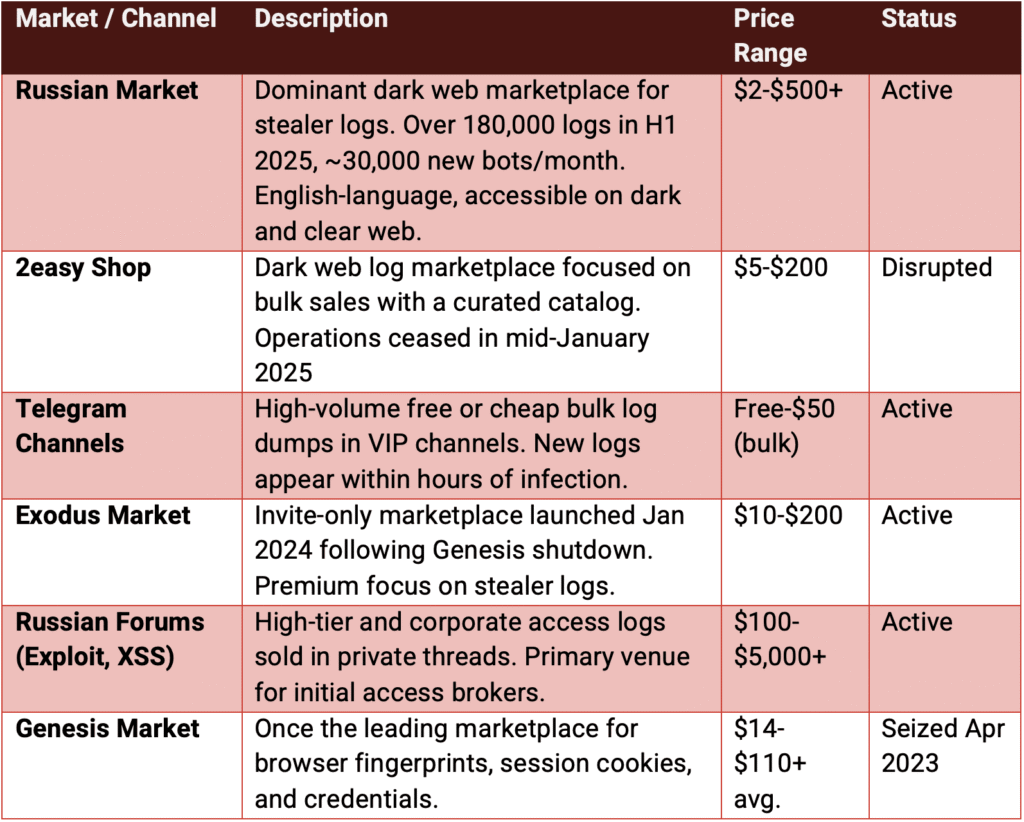
Stealer logs are typically organized by data category, letting buyers quickly locate what matters most to them. DarkOwl’s 2026 update on the phenomenon breaks the contents into recognizable buckets that criminals shop for like line items on a menu:
- Browser credentials: usernames and passwords across Chrome, Firefox, Edge, and other browsers, sorted by domain
- Session cookies and auth tokens: active logins that can bypass multi-factor authentication entirely
- Autofill and payment data: names, addresses, and card details enabling identity fraud
- Cryptocurrency wallet files, seed phrases, and private keys
- System and device information, including screenshots and hardware IDs
- VPN, FTP, and application tokens that open direct paths into corporate networks
Perhaps the most corrosive element of a stealer log is its assault on session persistence. Once a user completes MFA, the browser stores a cookie confirming that authentication already happened, and an attacker who imports that same cookie inherits the session without triggering a single new login prompt.
Bitsight’s research on credential theft confirms this bypass mechanism is now a routine feature of large-scale breaches rather than an edge case.
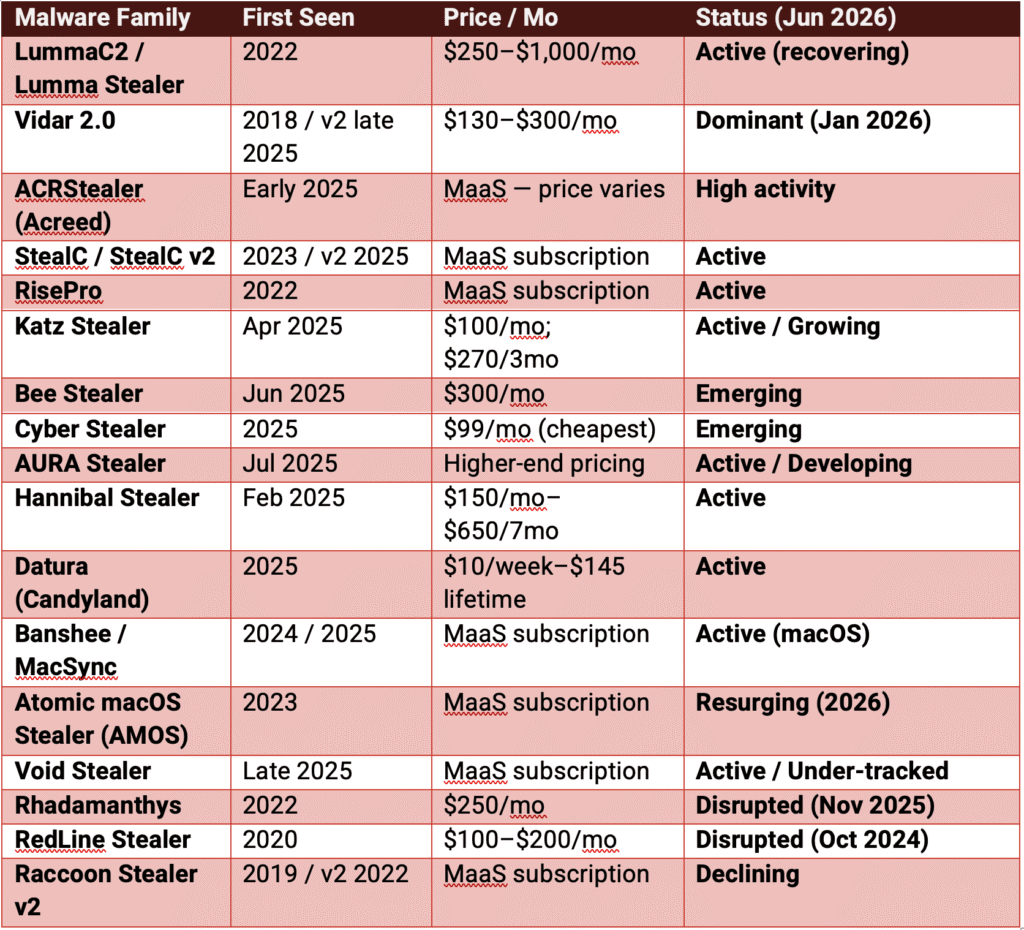
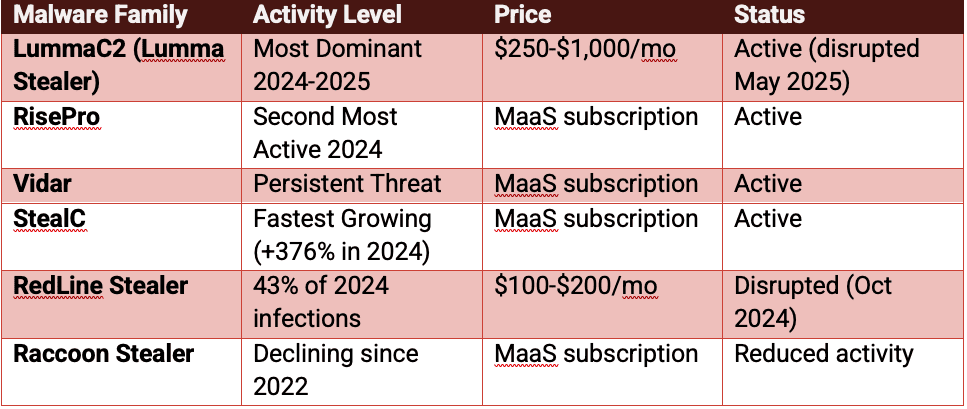
The infostealer ecosystem functions less like scattered hacking and more like an organized software business. Malware developers sell monthly subscriptions complete with customer support and affiliate programs, a model researchers describe as Malware-as-a-Service.
Even major law enforcement wins barely dent the market: Microsoft’s Digital Crimes Unit sinkholed roughly 394,000 infected hosts and seized 2,300 domains tied to LummaC2 in May 2025, yet the ecosystem simply reshuffled, with Acreed, Vidar, and StealC absorbing displaced volume within weeks.
Stealer logs rarely stay contained to the individual victim. Initial Access Brokers sift through millions of logs hunting for corporate VPN credentials and domain admin access, repackaging qualifying finds for resale at a premium.
Ransomware affiliates then buy this verified corporate access to walk straight past perimeter defenses, a pipeline researchers say now underpins the majority of major ransomware intrusions.
Separately, credential-stuffing and account-takeover buyers use stolen session cookies to drain payment methods and crypto exchanges without ever needing a password.
The numbers underline how normalized this trade has become. Infostealers harvested roughly 1.8 billion credentials across 5.8 million infected devices in 2025 alone, even as the sector’s dominant player was dismantled mid-year.
In June 2026, Have I Been Pwned absorbed a fresh accumulated stealer-log dataset containing 124 million unique passwords, illustrating that old logs continue resurfacing and circulating long after the original infection.
Security researchers increasingly argue that credential-only defenses are no longer adequate against this pipeline. DarkOwl’s guidance urges organizations toward hardware security keys, session token monitoring, and zero-trust architectures that treat every login session as potentially already compromised.
Until stolen credentials are explicitly revoked and rotated, they remain tradeable indefinitely, meaning a log stolen months ago can still open a door today.
About the Author


 Kiran
Kiran