Harish Kumar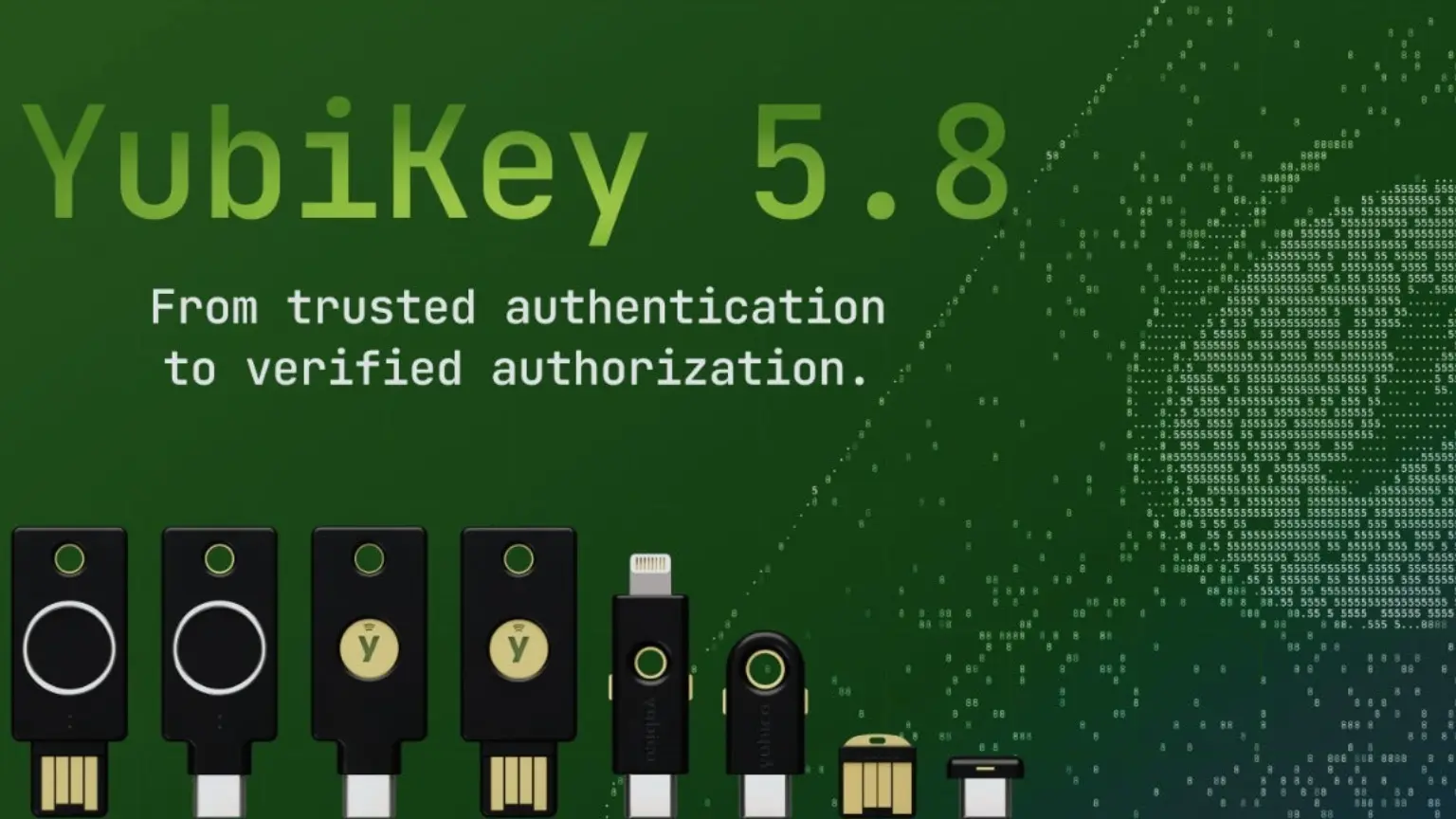
Yubico has pushed the boundaries of what a hardware security key can do. On July 21, 2026, the company announced general availability of YubiKey 5.8, a firmware release that shifts the device’s role from verifying who logs in to verifying what actions get approved.
For an industry racing to secure AI agents and automated workflows, that distinction matters more than it might sound. The update arrives as security teams grapple with a problem traditional multi-factor authentication (MFA) was never built to solve: confirming human intent behind high-stakes digital actions, not just confirming identity at login.
With generative and agentic AI now executing business processes at machine speed, Yubico is betting that phishing-resistant hardware needs to move deeper into the workflow itself.
YubiKey 5.8 Expands Passkeys From Login Security
YubiKey has long been synonymous with phishing-resistant login, using FIDO2 and WebAuthn standards it helped create. YubiKey 5.8 extends that same hardware-backed trust into digital signatures, identity wallets, payment confirmations, and AI-driven approval chains.
Albert Biketi, Yubico’s chief product and technology officer, described it as one of the most significant architectural shifts in modern authentication, framing the update as a way to bring dynamic, human-in-the-loop verification into environments where AI agents increasingly act on a user’s behalf.
YubiKey 5.8 introduces several developer-facing capabilities designed to reduce friction and integration cost:
- CTAP 2.3 support, plus preview access to the emerging WebAuthn signing extension, enabling hardware-backed digital signatures through standardized APIs.
- Expanded Enterprise Attestation, now supporting 16 Relying Party IDs per key, letting one YubiKey operate across dev, staging, and production environments without compromising privacy.
- Support for digital identity wallets, verifiable credentials, and Secure Payment Confirmation (SPC) for hardware-backed web payments.
- Persistent PIN/UV auth tokens that cut down repeated PIN prompts and improve credential discovery.
- Autofill-like credential discovery alongside software passkeys, aimed at easing adoption and reducing IT helpdesk overhead.
Notably, Yubico avoided requiring custom cryptographic backend infrastructure, opting instead to build on open standards so developers can integrate signing workflows without vendor lock-in.
Attackers are no longer just phishing for passwords; they’re targeting session tokens, approval workflows, and now the outputs of autonomous AI agents.
A stolen credential is bad, but an AI agent authorized to move funds, sign contracts, or approve deployments without cryptographic proof of human consent is arguably worse.
YubiKey 5.8 positions hardware-backed signatures as a check against exactly that scenario, giving organizations a way to cryptographically bind an action to a verified human decision.
Leif Johansson, executive director at the SIROS Foundation, called the signing capability a “game changer” for digital identity, noting that SIROS is already working to fold these features into a broader phishing-resistant credential framework. Regulated environments should note that FIPS and CCN-certified YubiKey lines remain on firmware 5.7.4 for now.
FIPS 140-3 recertification and CCN re-certification processes mean compliance-focused deployments won’t see 5.8 features until those validations complete, a reminder that innovation in this space still moves at the pace of regulatory approval YubiKey 5.8 is shipping now across Yubico’s major product lines, backward-compatible with all 5.7.4 capabilities.
About the Author

 Kiran
Kiran