Kiran
Google is rolling out new defenses against Android scams. They include an opt-in Enhanced protection mode in Google Messages, wider chat-notification alerts, and safeguards against call forwarding, screen-sharing abuse, and spoofed bank calls. The company announced the changes on October 14, 2026.
Mobile fraud now goes well beyond robocalls and crude phishing texts. Scammers use spoofed numbers, fake bank alerts and AI voice cloning.
A Google and YouGov survey across the U.S., Canada and Australia found that 40% of smartphone users are “very” or “extremely” concerned about mobile fraud.
Android Adds Gemini-Powered Scam Shields
Google says Scam Detection in Phone by Google and Google Messages already flags more than 5 million suspected scam calls and texts every month.
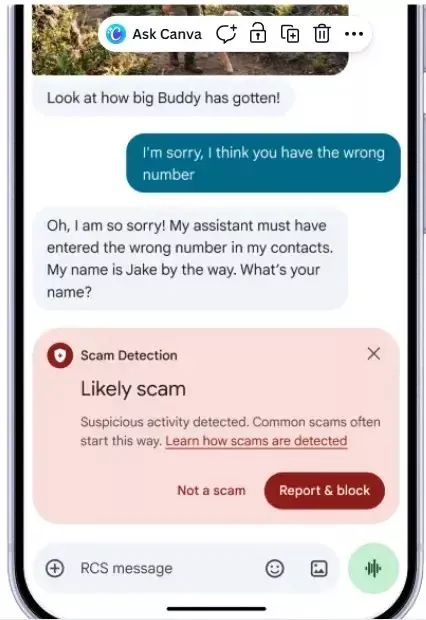
The headline feature is Enhanced protection mode, an opt-in setting that Google says will arrive in the coming weeks. It targets slow-burn scams in which an attacker hides their intent over a long conversation.
Scam Detection will use Google’s most capable cloud Gemini models to judge message context when the sender is unknown.
That analysis runs in Private AI Compute, which Google describes as an encrypted, dedicated space that even Google cannot access.
The mode also upgrades link checking. On-device Gemini Nano will weigh real-time web signals to judge unfamiliar links, which matters because scammers register brand-new domains that blocklists have not yet cataloged.
Redesigned warnings will slow users down before they tap links from numbers not saved in their contacts. Until now, that feature was limited to select countries or to devices with Android Advanced Protection.
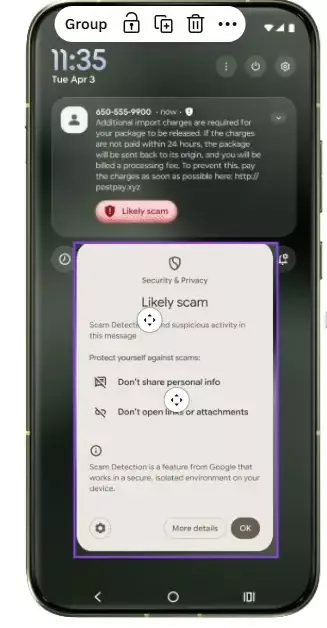
Scam Detection in chat notifications debuted on Pixel, warning users about suspicious messages in the notification shade before they open a popular chat app. Google says it is working with Android device makers to bring this to hundreds of millions more users later this year.
Two new safeguards address phone-based social engineering. Automatic screen-share privacy already hid sensitive data in native apps.
It now extends to Chrome and Android WebView, blanking login fields and payment screens during live screen sharing. That blocks a common trick in which a fraudster “helps” a victim and watches them type credentials.
Call-forwarding protection tackles OTP theft. Scammers often redirect a victim’s incoming calls to intercept one-time passcodes and take over accounts.
Android now stops apps from quietly enabling call forwarding in the background. If someone is coaxed into typing an MMI forwarding code on the dial pad, the system warns them before it takes effect.
Caller ID spoofing powers many bank impersonation scams. FEBRABAN reports that such scams in Brazil rose 195.7% over 12 months.
In response, Android works with banking apps, including Banco do Brasil and Itaú Unibanco, to check in real time whether the bank actually placed an incoming call. If verification fails, Android hangs up and alerts the user.
Google says the feature has blocked more than 3 million spoofed calls from those two banks alone since its June launch. It does this by ending calls that spoof inbound-only numbers, official lines never used to contact customers. Revolut is among the other institutions already covered, and Google plans to add more partners.
A Google-commissioned Leviathan Security Group evaluation concluded that Android offers stronger out-of-the-box scam protection than iOS. It cited proactive call screening, fake call detection, and Circle to Search threat warnings.
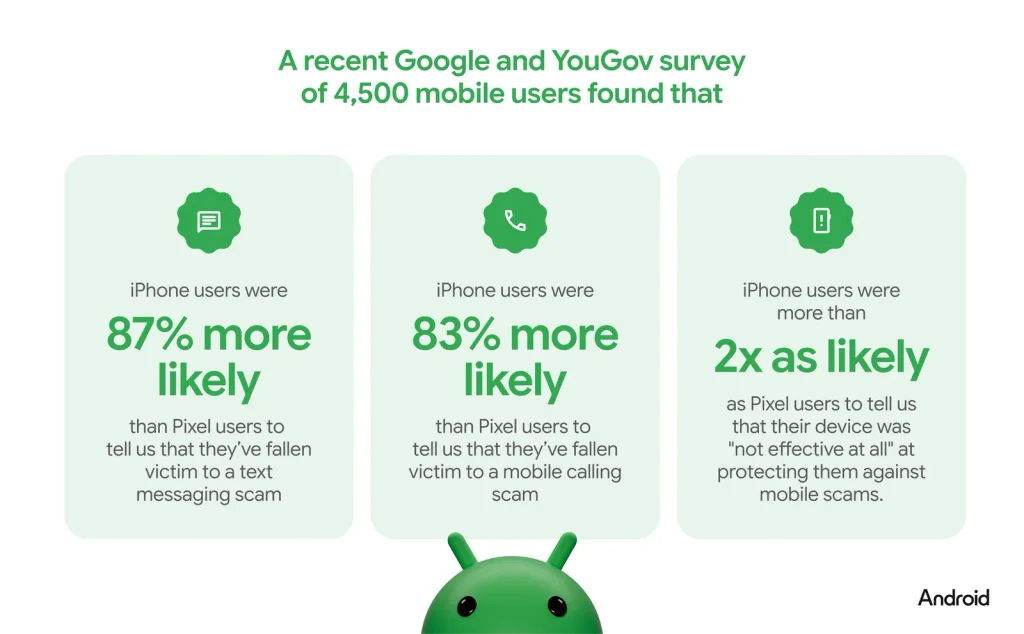
A separate Google and YouGov survey of 4,500 users found that iPhone owners were more likely than Pixel owners to report falling victim to scams. Readers should note that both studies were commissioned or run by Google, so independent replication would add weight.
The new tools still depend on users opting in and on manufacturers adopting them. Security teams should still treat unsolicited links and “bank” calls with suspicion, whatever the phone says.
Site: Thecyberdef.com
Follow TheCyberDef on Google News, LinkedIn & X for the latest cybersecurity updates. Stay informed.
About the Author