Kiran
Kiran 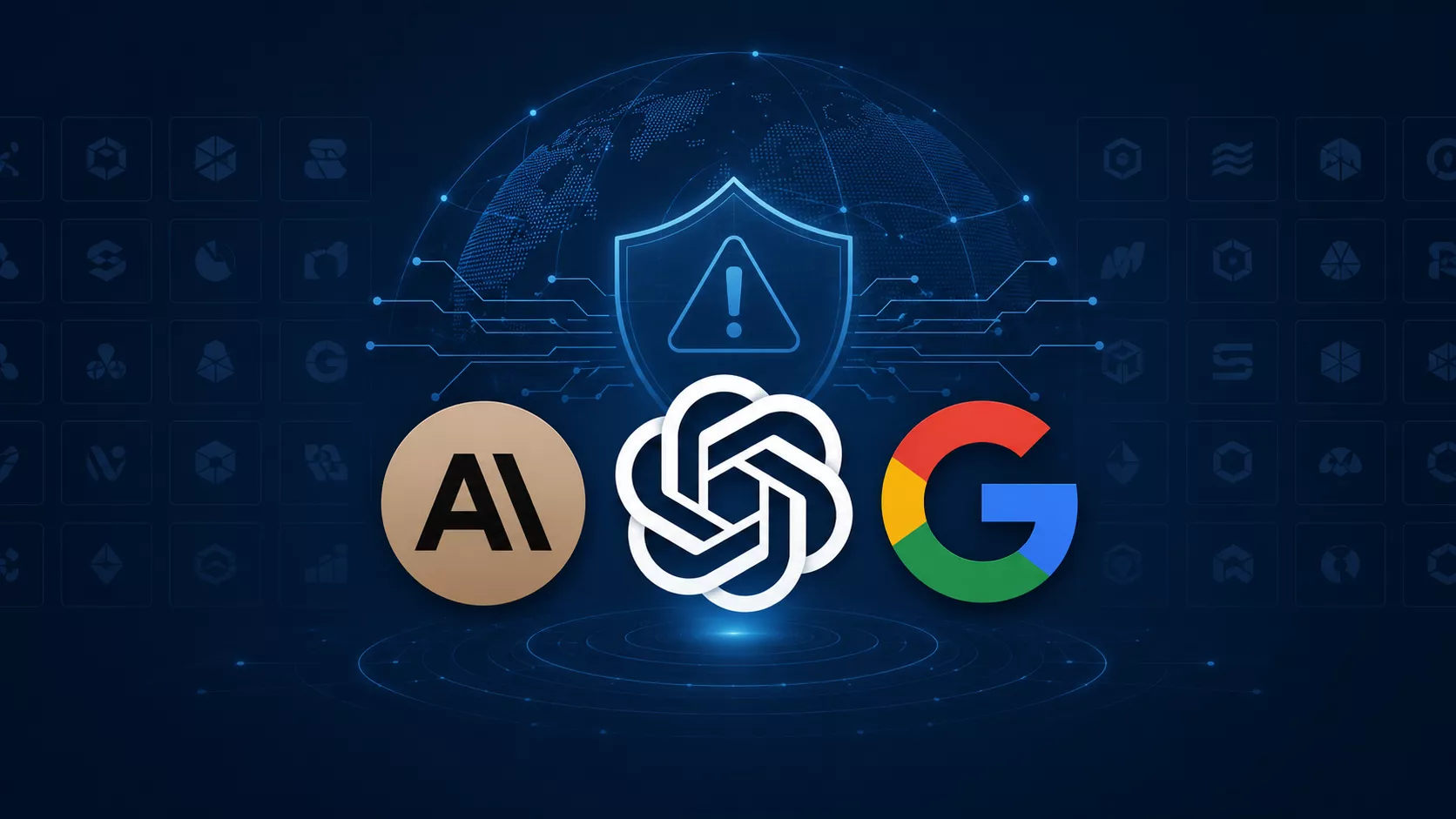
OpenAI, Anthropic, Google, Microsoft, and more than 110 other organizations have published a joint open letter warning that AI-enabled cyberattacks will soon overwhelm the defenses of hospitals, water utilities, and other critical infrastructure unless industry and governments act now.
Released Thursday, August 27, and led by OpenAI, the letter frames the moment as a closing “defenders’ window,” a narrow period in which AI can still be used to fix accumulated security debt before attackers fully exploit increasingly capable models.
OpenAI, Anthropic, Google, 100+ Firms Warn
The signatory list spans nearly every corner of the tech and finance ecosystem: rival AI labs OpenAI and Anthropic standing side by side, cloud giants AWS, Google, Microsoft, and Oracle, and cybersecurity heavyweights CrowdStrike, Palo Alto Networks, Cloudflare, Check Point, Okta, and Fortinet.
Financial institutions including Capital One, Mastercard, Visa, and Robinhood joined industrial names like General Motors and Shopify, as well as Perplexity, underscoring that the threat extends well beyond the tech sector into payments, manufacturing, and consumer platforms.
The letter’s central claim is blunt: “status quo security won’t be enough.” Longstanding bugs, excessive permissions, misconfigurations, unpatched software, weak authentication, and legacy technical debt have left systems exposed for years, and chronically under-resourced security teams, especially in critical infrastructure, can no longer keep pace unaided.
Rather than a single mandate, the letter lays out a tiered call to action. Every organization is urged to treat cyber defense with incident-level urgency, patching the highest-risk weaknesses, verifying fixes without disrupting operations, and raising security bars for anything bought, built, or deployed, including AI-generated code.
Cybersecurity vendors and technology partners are asked to stress-test defenses against frontier-level attack capabilities and make AI-powered protection deployable for cash-strapped critical-infrastructure operators.
Governments, the letter argues, must coordinate cyber defense across local, national, and international lines, fund protection for essential services first, and extend access to defensive AI to hospitals and water utilities through trusted partners, while also “imposing costs on attackers”.
Frontier AI companies, meanwhile, are pushed to provide responsible model access, funding, and hands-on support to under-resourced defenders, and to ensure autonomous “agentic” AI identities remain traceable and accountable.
What stands out to security researchers is less the content, much of which echoes existing best practices like least privilege and defense in depth, than the coalition itself.
Getting OpenAI and Anthropic, perennial competitors, plus dozens of banks, telecoms, and infrastructure firms to co-sign the same document signals genuine alarm about the trajectory of AI-enabled offense.
Analysts note that the letter arrives amid growing reports of AI-assisted intrusion attempts, including an incident involving Anthropic’s own systems, as referenced in early coverage of the letter.
Whether the pledge translates into funded action, particularly for under-resourced public-sector defenders, remains the open question.
The signatories have committed to sharing threat intelligence, tested playbooks, and verified fixes, but the letter sets no binding deadlines or enforcement mechanism, leaving its “collective response” dependent on voluntary follow-through from an unusually broad and competitive set of organizations.
Site: Thecyberdef.com
Follow TheCyberDef on Google News, LinkedIn & X for the latest cybersecurity updates. Stay informed.
About the Author


 George antony