 Kiran
An IAM platform is a set of tools and policies that manage digital identities and control access to systems, data, and applications. A modern enterprise IAM platform typically covers:
- Single Sign-On (SSO): One secure login for all approved applications.
- Multi-Factor Authentication (MFA): Extra verification beyond a password.
- Identity Governance and Administration (IGA): Access requests, approvals, certifications, and role management.
- Privileged Access Management (PAM): Protection for admin and high-risk accounts.
- Lifecycle Management: Automated onboarding, role changes, and offboarding.
- Adaptive and Risk-Based Access: Access decisions based on device, location, and behavior.
How We Selected These IAM Platforms
We evaluated each platform on the criteria that matter most to enterprise security teams:
- Depth of authentication, SSO, and MFA capabilities
- Identity governance and lifecycle automation
- Integration breadth across cloud, SaaS, and on-premises systems
- Scalability for large, complex environments
- Support for Zero Trust and least-privilege principles
- Reporting and compliance readiness
Quick Comparison
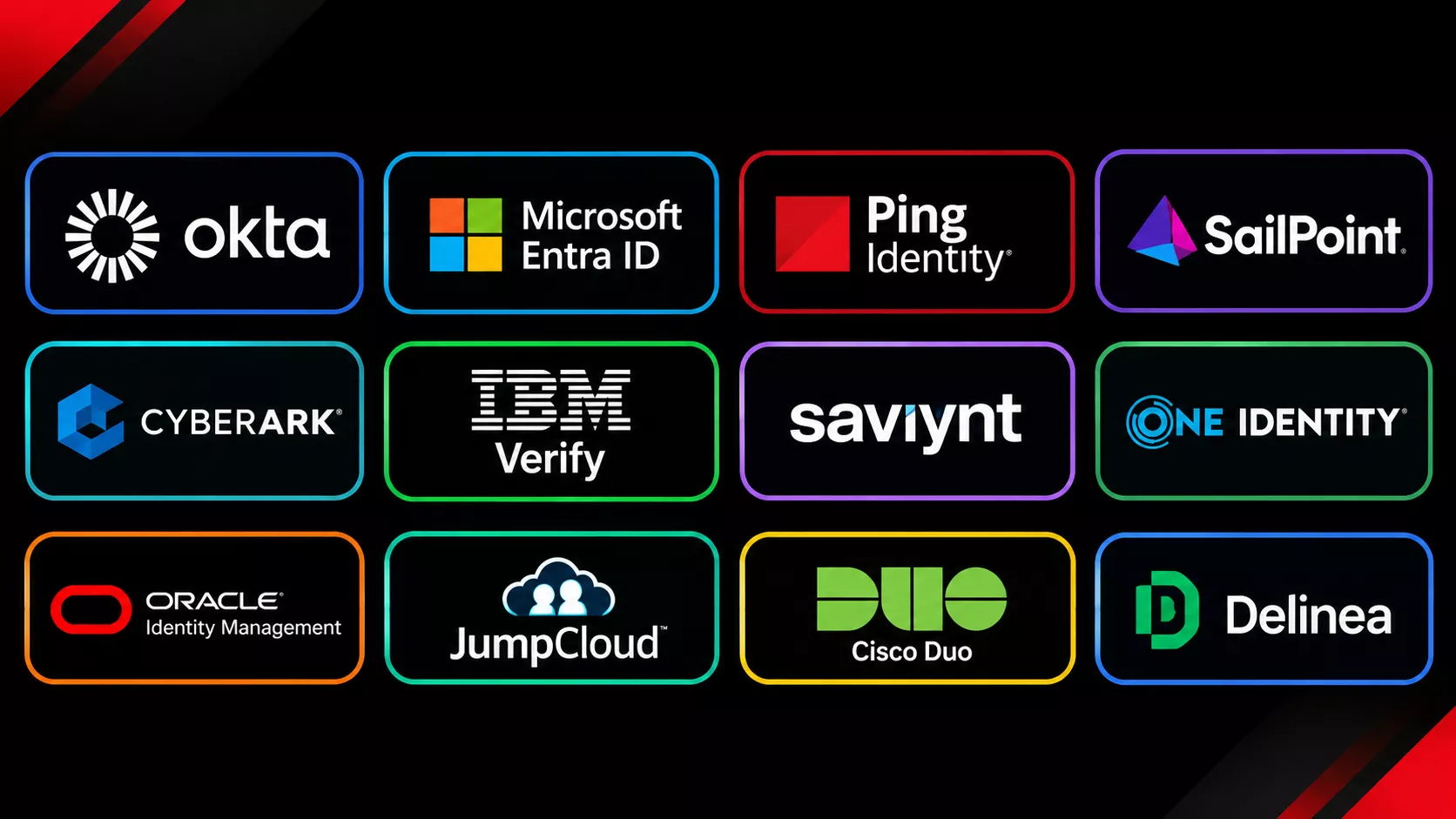
| Platform | Best For | Core Strength |
|---|---|---|
| Okta | Cloud-first workforce identity | SSO, MFA, large integration network |
| Microsoft Entra ID | Microsoft-centric organizations | Conditional Access, Microsoft 365 integration |
| Ping Identity | Hybrid and complex environments | Federation, orchestration |
| SailPoint | Large-scale governance | Identity governance and compliance |
| CyberArk | Privileged access security | PAM and credential protection |
| IBM Verify | Regulated industries | AI-driven access, hybrid support |
| Saviynt | Converged governance | Cloud-native IGA and PAM |
| One Identity | Mixed on-prem and cloud | Governance, AD management, PAM |
| Oracle Identity | Oracle-heavy stacks | Scalable lifecycle management |
| JumpCloud | Mid-size to growing enterprises | Directory, device, and access in one |
| Cisco Duo | Fast MFA rollout | Device trust and MFA |
| Delinea | Privileged access and least privilege | PAM and secrets management |
1. Okta
Okta is one of the most widely adopted cloud identity platforms. Enterprises use it as a neutral identity layer that connects employees, partners, and customers to thousands of applications without locking them into a single vendor ecosystem.
- Best for: Cloud-first enterprises with many SaaS applications
- Key capabilities: Single sign-on, adaptive MFA, lifecycle management, workflows, and API access management
- Strengths: Large pre-built integration catalog, strong user experience, and flexible policy controls
- Limitations: Advanced governance and PAM features may require additional products, and costs can rise as modules are added
- Ideal use case: Organizations that want a vendor-neutral identity layer across a diverse application landscape
2. Microsoft Entra ID
Microsoft Entra ID (formerly Azure Active Directory) is the identity backbone for organizations built on Microsoft 365 and Azure. Its tight integration with the Microsoft ecosystem makes deployment straightforward for companies already invested in that stack.
- Best for: Microsoft-centric enterprises
- Key capabilities: SSO, MFA, Conditional Access, identity protection, privileged identity management, and access reviews
- Strengths: Native Microsoft integration, strong risk-based Conditional Access, and broad licensing options
- Limitations: Non-Microsoft application support can need extra configuration, and some premium features depend on higher license tiers
- Ideal use case: Companies standardizing on Microsoft 365, Azure, and Windows environments
3. Ping Identity
Ping Identity is built for enterprises with complex, hybrid environments. It excels at federation and at connecting legacy systems with modern cloud applications, and it also supports customer identity use cases.
- Best for: Large organizations with hybrid infrastructure
- Key capabilities: Federated SSO, MFA, identity orchestration, API security, and fraud detection
- Strengths: Strong standards support, deployment flexibility (cloud, on-premises, hybrid), and powerful orchestration
- Limitations: Implementation can be complex and often benefits from skilled identity architects
- Ideal use case: Enterprises that need to unify workforce and customer identity across mixed environments
4. SailPoint
SailPoint is a leader in identity governance. It focuses on answering a hard question: who has access to what, and should they? Its platform automates access requests, certifications, and policy enforcement at enterprise scale.
- Best for: Large enterprises with heavy compliance requirements
- Key capabilities: Access certification, role modeling, lifecycle automation, access recommendations, and separation-of-duties controls
- Strengths: Mature governance features, strong audit reporting, and AI-assisted access insights
- Limitations: Rollouts are often long and resource-intensive, and it works best alongside separate access management tools
- Ideal use case: Regulated organizations that must prove access control to auditors
5. CyberArk
CyberArk is known for privileged access security. It protects the accounts attackers want most, such as administrators, service accounts, and application and automation secrets.
- Best for: Organizations prioritizing privileged account protection
- Key capabilities: Credential vaulting, session monitoring and isolation, just-in-time access, secrets management, and endpoint privilege management
- Strengths: Deep PAM capabilities, strong protection for critical accounts, and a broad security partner ecosystem
- Limitations: It can be heavy to deploy and manage, and it is not a full workforce SSO replacement
- Ideal use case: Enterprises that need strict control and auditing of high-risk accounts
6. IBM Verify
IBM Verify provides AI-driven identity and access management for hybrid environments. It suits organizations in regulated sectors that need strong governance alongside flexible deployment choices.
- Best for: Financial services, healthcare, and government
- Key capabilities: SSO, adaptive access, MFA, identity governance, and risk-based authentication
- Strengths: Strong analytics, broad hybrid support, and enterprise-grade scale
- Limitations: The interface and configuration can feel complex compared to newer cloud-native competitors
- Ideal use case: Large, regulated enterprises with a mix of legacy and cloud systems
7. Saviynt
Saviynt offers a cloud-native identity platform that converges governance, access management, and privileged access in a single solution. This helps teams reduce tool sprawl.
- Best for: Enterprises wanting unified governance and access controls
- Key capabilities: Identity governance, application access governance, PAM, and cloud security controls
- Strengths: Converged approach, strong cloud and SaaS governance, and analytics-driven access decisions
- Limitations: Initial configuration and tuning can take time for complex environments
- Ideal use case: Organizations modernizing identity governance with a cloud-first strategy
8. One Identity
One Identity provides a broad portfolio covering governance, Active Directory management, access management, and PAM. It is a practical choice for organizations managing both on-premises and cloud identities.
- Best for: Mixed on-premises and cloud environments with strong Active Directory dependence
- Key capabilities: Identity governance, Active Directory security, PAM, and access management
- Strengths: Strong Active Directory tooling, flexible modular approach, and solid governance features
- Limitations: Multiple products can mean separate consoles and integration effort
- Ideal use case: Enterprises with large Active Directory estates that need unified identity oversight
9. Oracle Identity Management
Oracle Identity Management is designed for large, complex environments, particularly those already running Oracle applications and infrastructure. It handles high-volume identity lifecycle and access scenarios.
- Best for: Oracle-heavy technology stacks and large-scale deployments
- Key capabilities: Identity lifecycle management, access management, directory services, and governance
- Strengths: Proven scalability, deep Oracle integration, and strong directory services
- Limitations: Can be resource-intensive to deploy, and it is less attractive for organizations outside the Oracle ecosystem
- Ideal use case: Enterprises running mission-critical Oracle workloads at scale
10. JumpCloud
JumpCloud combines directory services, SSO, MFA, device management, and access control in a single cloud platform. It appeals to organizations that want a simpler, consolidated approach.
- Best for: Mid-size to growing enterprises and distributed teams
- Key capabilities: Cloud directory, SSO, MFA, device management, and policy-based access
- Strengths: Unified management of users and devices, quick deployment, and cross-platform support
- Limitations: Very large enterprises may need deeper governance and PAM than the platform offers natively
- Ideal use case: Companies replacing legacy directory infrastructure with a modern cloud approach
11. Cisco Duo
Cisco Duo is a popular choice for adding strong authentication quickly. It focuses on MFA and device trust, helping organizations verify both the user and the health of the device before granting access.
- Best for: Fast MFA rollout and Zero Trust access
- Key capabilities: MFA, device health checks, adaptive policies, SSO, and passwordless options
- Strengths: Easy deployment, user-friendly experience, and strong device visibility
- Limitations: It is not a full identity governance or lifecycle platform
- Ideal use case: Enterprises that need to strengthen authentication quickly without a lengthy project
12. Delinea
Delinea delivers privileged access management and least-privilege controls for organizations that need to secure admin accounts and secrets across hybrid environments.
- Best for: Teams focused on least privilege and privileged account control
- Key capabilities: Secret server and vaulting, privileged session management, endpoint privilege controls, and just-in-time elevation
- Strengths: Strong PAM depth, flexible deployment, and good usability for administrators
- Limitations: It addresses privileged access rather than broad workforce identity, so it typically complements an SSO platform
- Ideal use case: Enterprises tightening control over administrator and service accounts
How to Choose the Right IAM Platform
No single platform fits every organization. Use these questions to narrow your shortlist:
- What is your environment? Cloud-only, hybrid, and Microsoft-heavy stacks each favor different tools.
- What is your biggest risk? If it is privileged accounts, prioritize PAM. If it is audit pressure, prioritize governance.
- How mature is your team? Governance-heavy platforms need dedicated resources, while simpler platforms deploy faster.
- What are your compliance needs? Frameworks such as SOX, HIPAA, and ISO 27001 demand strong reporting. Our guide to governance, risk and compliance software platforms shows how identity controls fit into a wider compliance program.
- How will it integrate? Check support for your existing applications, directories, and security stack.
Why IAM Alone Is Not Enough
Strong identity controls are essential, but attackers still find ways around them through session theft, phishing, and compromised endpoints. IAM works best when paired with detection and response. Feeding identity events into a next-generation SIEM platform helps your team spot suspicious sign-ins and privilege abuse early. Pairing identity controls with endpoint detection and response (EDR) solutions closes the gap on compromised devices, which are a common route to stolen credentials.
IAM Best Practices for Enterprises
- Enforce MFA for every user, and favor phishing-resistant methods where possible.
- Apply least privilege and review access on a regular schedule.
- Automate joiner, mover, and leaver processes to remove orphaned accounts.
- Protect privileged and service accounts with vaulting and just-in-time access.
- Monitor identity logs continuously and alert on unusual behavior.
- Plan for non-human identities such as APIs, bots, and workloads.
Frequently Asked Questions (FAQs)
1. What is the difference between IAM and PAM?
IAM manages access for all users across the organization, including authentication, SSO, and lifecycle management. PAM is a specialized subset that secures privileged accounts such as administrators and service accounts. Most enterprises need both.
2. Which IAM platform is best for large enterprises?
It depends on your priorities. Okta and Ping Identity suit complex, multi-application environments. SailPoint leads in governance, and Microsoft Entra ID is a natural fit for Microsoft-centric organizations. Many enterprises combine two or three tools.
3. How does IAM support Zero Trust security?
Zero Trust assumes no user or device is trusted by default. IAM supports this by verifying identity on every request, enforcing least privilege, evaluating device and risk signals, and applying adaptive access policies.
4. How long does it take to implement an enterprise IAM platform?
Timelines vary widely. Lightweight deployments such as MFA rollouts can take weeks. Full governance and lifecycle projects across large environments often take several months to over a year.
About the Author