
 Kiran
Endpoints are where most attacks begin and where most damage is done. Laptops, servers, virtual machines and cloud workloads all hold credentials and data that attackers want.
Recent incidents show how quickly things escalate: a worm-capable toolkit hijacked 288 managed endpoints across 48 organizations by abusing a remote management flaw, and teams without deep endpoint visibility were the last to find out. Traditional antivirus cannot catch this kind of behavior.
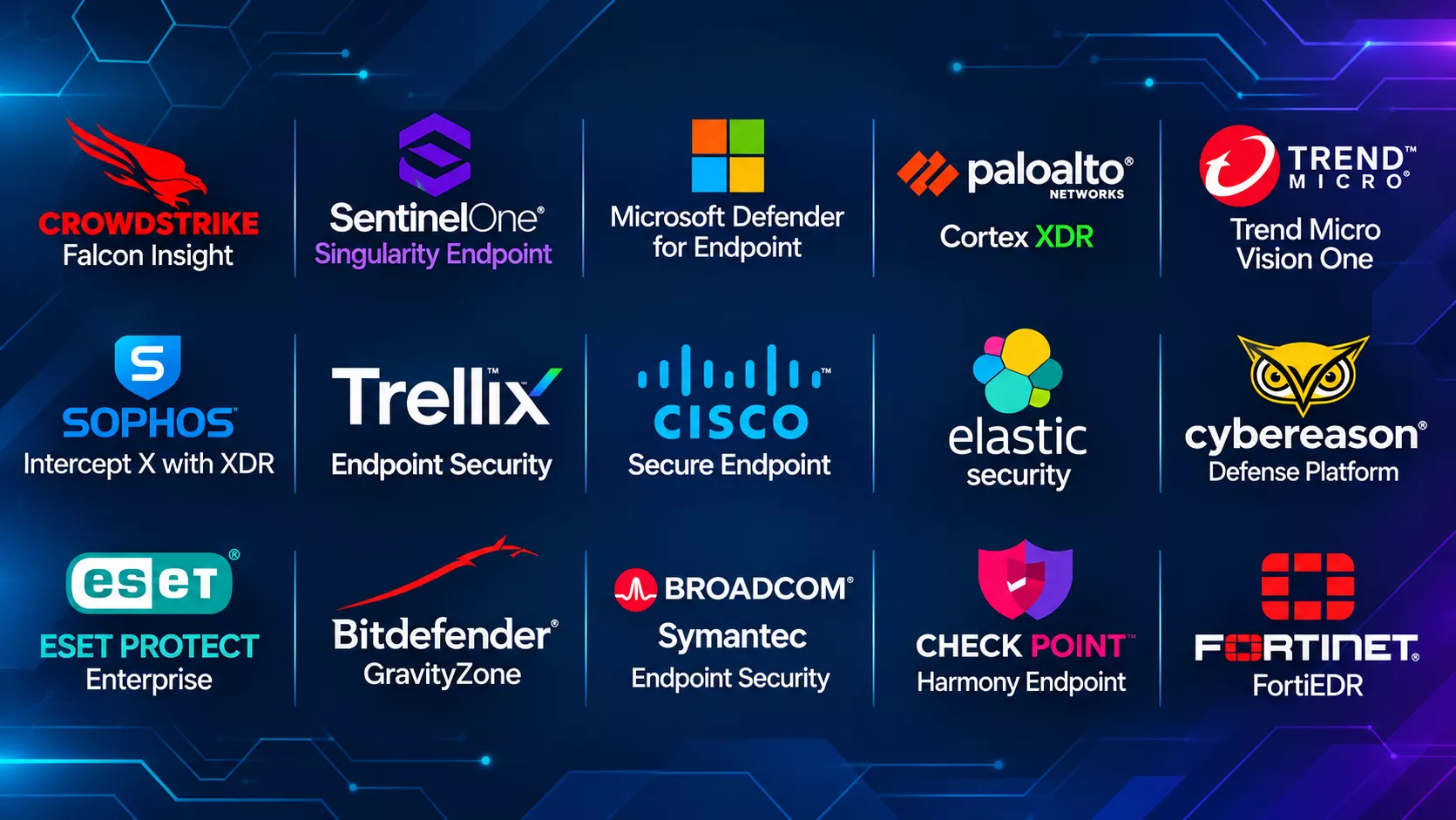
Enterprise EDR platforms record endpoint activity, flag suspicious behavior and let analysts isolate a machine within seconds. This guide ranks the 15 best EDR solutions for enterprises in 2027, with the strengths, ideal use cases and trade-offs of each.
What Is EDR and Why Do Enterprises Need It?
Endpoint detection and response continuously collects telemetry from endpoints, such as process launches, file changes, registry edits and network connections, then analyzes it for malicious patterns. When something looks wrong, the platform alerts analysts, preserves forensic evidence and offers response actions like isolating a host, killing a process or rolling back changes.
Ransomware is a major driver of adoption. Campaigns such as BlackNevas, which destroyed ESXi virtual machines and backups, prove that attackers now target the very infrastructure recovery depends on. An EDR with strong behavioral detection can stop the staging activity that usually happens days before encryption begins.
How We Selected the Best EDR Tools
We compared each platform on detection quality, response automation, threat hunting depth, coverage across Windows, macOS and Linux, agent performance, integration with SIEM, SOAR and identity tools, scalability and managed service options.
Descriptions come from public vendor information, so always run a proof of concept in your own environment before signing a contract.
The 15 Best EDR Solutions for Enterprises in 2027
1. CrowdStrike Falcon Insight
CrowdStrike Falcon Insight runs on a single lightweight cloud-native agent and relies on its Threat Graph to correlate events at scale. Its Falcon OverWatch team adds human-led threat hunting around the clock. It suits large enterprises that want mature detection and hunting across all major operating systems. The main trade-off is premium, module-based pricing.
2. SentinelOne Singularity Endpoint
SentinelOne Singularity is known for autonomous, on-agent AI that can detect and respond even when a device is offline. Its storyline view makes investigations quick, and rollback features help recover from ransomware. It fits lean security teams that want strong automation. Some organizations find advanced data retention and hunting features require additional licensing.
3. Microsoft Defender for Endpoint
Microsoft Defender for Endpoint is the natural choice for organizations already standardized on Microsoft 365 and Entra ID. It offers deep Windows telemetry and tight identity, email and cloud integration through Defender XDR. Because it sits inside a broader platform, wider outages matter: a Microsoft 365 outage disrupted Outlook, Teams, Copilot and Defender XDR in November 2026, so keep a fallback response procedure.
4. Palo Alto Networks Cortex XDR
Cortex XDR combines endpoint, network and cloud data in one analytics engine, which helps analysts see an attack across the whole kill chain. It works best for organizations already using Palo Alto firewalls and Cortex tools. Its power comes with complexity, so expect a longer onboarding period and a need for skilled administrators.
5. Trend Micro Vision One
Trend Micro Vision One brings endpoint, email, network, identity and cloud signals into a single XDR console with strong risk-based prioritization. Enterprises with hybrid environments and compliance requirements value its broad coverage and managed service options. Its dashboards can feel dense at first, but the cross-layer correlation reduces alert noise once tuned.
6. Sophos Intercept X with XDR
Sophos Intercept X pairs strong prevention, including anti-ransomware and exploit protection, with EDR and an optional managed detection and response service. It is a popular pick for mid-size and distributed enterprises that need a capable platform without a large in-house SOC. Its straightforward management console keeps day-to-day operations simple.
7. Trellix Endpoint Security
Trellix Endpoint Security combines endpoint protection and EDR with a focus on threat intelligence and investigation workflows. It suits enterprises with existing McAfee Enterprise or FireEye investments and those wanting a unified approach to endpoint, email and network defense. Buyers should confirm roadmap details and integration depth during evaluation.
8. Cisco Secure Endpoint
Cisco Secure Endpoint integrates with the wider Cisco Security Cloud, including SecureX-style orchestration and Talos threat intelligence. Retrospective detection lets analysts trace files that were later deemed malicious. It is best for organizations already invested in Cisco networking and security, where shared context across products saves response time.
9. Elastic Security
Elastic Security merges SIEM and endpoint protection on the Elastic Stack, giving analysts powerful search across endpoint and log data. It appeals to engineering-led teams that value flexibility, open detection rules and the ability to build custom hunts. The trade-off is that it rewards teams with strong technical skills and platform ownership.
10. Cybereason Defense Platform
Cybereason focuses on operation-centric detection, mapping a full attack story rather than isolated alerts. This reduces analyst workload and speeds up scoping. It fits organizations that want strong incident response context and optional managed services. Check current ownership, support and roadmap details when evaluating, as the vendor landscape has shifted in recent years.
11. ESET PROTECT Enterprise
ESET PROTECT Enterprise offers EDR through ESET Inspect on top of lightweight, low-impact endpoint protection. It performs well on older hardware and in regulated or regional environments where agent footprint matters. It suits organizations that want solid detection without heavy resource usage, though its ecosystem is smaller than the largest XDR vendors.
12. Bitdefender GravityZone
Bitdefender GravityZone is regularly praised for strong prevention and detection results in independent testing. It scales from small teams to large enterprises and offers EDR, XDR and managed detection options under one console. It is a strong value choice for organizations that want high detection quality at a competitive price.
13. Broadcom Symantec Endpoint Security
Symantec Endpoint Security delivers a long-established feature set with machine learning, behavioral analysis, deception and attack surface reduction. It fits large, regulated enterprises with complex legacy environments and on-premises requirements. Its strength is breadth and maturity, while some buyers report licensing and support experience varies.
14. Check Point Harmony Endpoint
Check Point Harmony Endpoint delivers EDR with strong prevention, forensics and automated remediation, managed through the same console as Check Point’s other Harmony and Infinity products. It suits enterprises already running Check Point gateways that want unified policy and visibility. It also supports remote workforces with built-in browser and email protection.
15. Fortinet FortiEDR
Fortinet FortiEDR provides real-time protection and orchestrated response, and it connects with the Fortinet Security Fabric for shared context with firewalls, email and SIEM tools. It is best for organizations standardized on Fortinet, wanting one vendor across network and endpoint. Its value is highest inside the Fortinet ecosystem.
How to Choose the Right EDR for Your Enterprise
Start with your environment. A Microsoft-heavy company will likely test Defender first, while mixed estates often favor CrowdStrike, SentinelOne or Bitdefender. Next, assess your team.
If you lack 24/7 analysts, prioritize platforms with strong managed detection and response options. Finally, validate with a real proof of concept: simulate common attacker techniques, measure alert quality, test isolation speed and check agent performance on your busiest systems.
Also confirm integration with your SIEM, identity provider and ticketing tools, and ask about data retention limits, because investigations often need telemetry from weeks earlier.
Conclusion
The best EDR solution is the one that fits your environment, your team and your risk profile. CrowdStrike, SentinelOne and Microsoft remain the common shortlist leaders, but Palo Alto, Trend Micro, Sophos, Bitdefender and the others each win in specific scenarios.
Shortlist three, run a proof of concept, and judge them on detection quality and response speed rather than marketing claims. Strong endpoint visibility is no longer optional in 2027.
Frequently Asked Questions (FAQ)
1. What is the difference between EDR and antivirus? Antivirus mainly blocks known malware using signatures and basic heuristics. EDR continuously records endpoint behavior, detects unknown and fileless threats, supports investigation and enables rapid response such as host isolation.
2. What is the difference between EDR, XDR and MDR? EDR focuses on endpoints. XDR extends detection across email, identity, network and cloud. MDR is a service in which external experts monitor and respond on your behalf, often using an EDR or XDR platform.
3. Which EDR is best for large enterprises in 2027? CrowdStrike Falcon Insight, SentinelOne Singularity and Microsoft Defender for Endpoint are the most common shortlist choices for large enterprises, although the best option depends on your existing tools and team skills.
4. Can EDR stop ransomware? EDR can detect and block many ransomware behaviors, such as credential theft, lateral movement and mass file encryption, and some platforms offer rollback. It works best alongside backups, patching, identity controls and network segmentation.
About the Author

1 thought on “15 Best Endpoint Detection and Response (EDR) Solutions for Enterprises in 2027”